1980
Born in Istanbul
Born on 19 December 1980 and raised in Istanbul, with his earliest years centered in the Rami area.
Official Artist Biography
Composer • Guitarist • Music Producer • Software Engineer
Founder of Neo-Sacred Zikr
Born in Istanbul on 19 December 1980, Berk KÖKSAL is a Turkish composer, guitarist, vocalist, songwriter, arranger, music producer, mix and mastering engineer, software engineer, Computer Science graduate and QUR'AN researcher whose creative journey developed from classical guitar and MIDI programming into a wide independent sacred music universe.
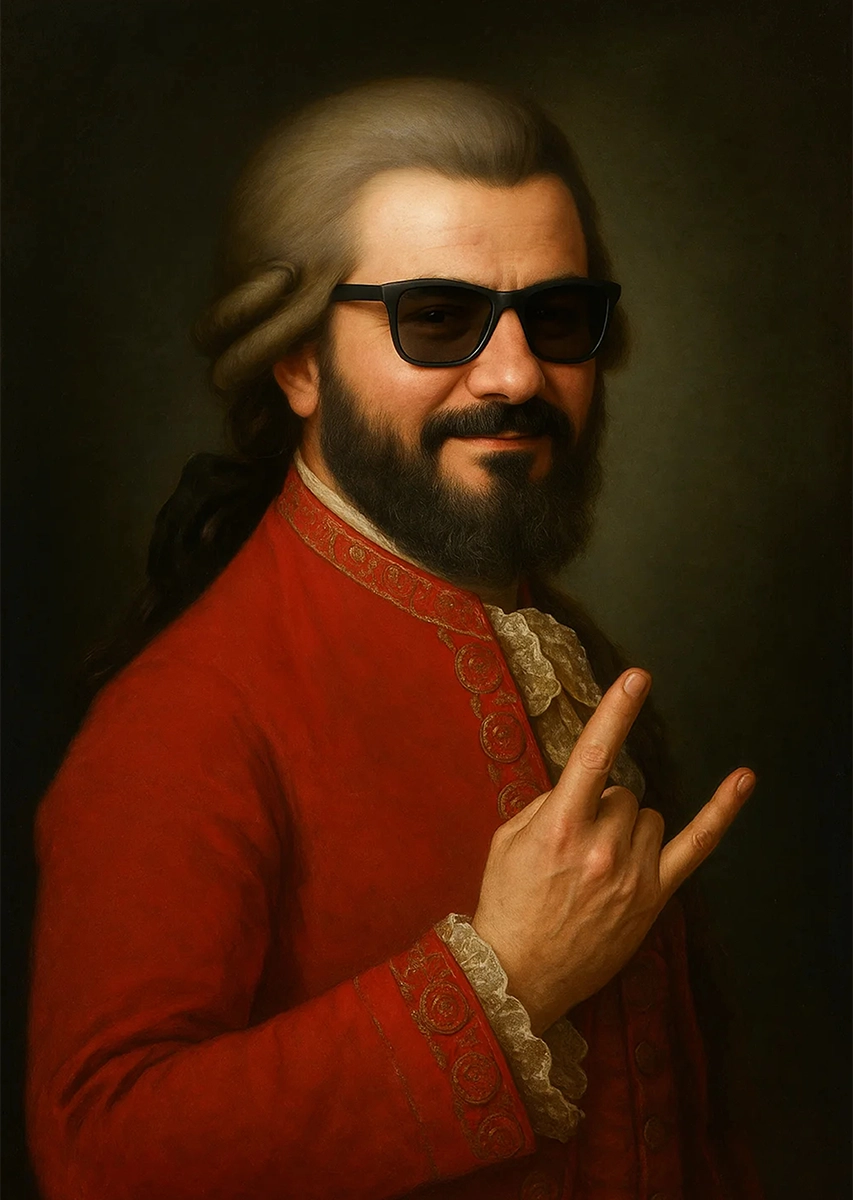
I
Köksal's relationship with music began in childhood through his father's guitar. Before formal training, he explored melody on the instrument in the most elementary way — at one point working with a single string. Around the age of twelve or thirteen, he began private classical guitar lessons in Gaziosmanpaşa.
As computers and MIDI became increasingly accessible, Guitar Pro 3 became an important self-education tool. He learned to reconstruct music by ear, writing guitar, bass, drums, strings and other parts in MIDI and tablature. Under the online name berkgitarist, he shared tabs, chords and Guitar Pro files across early music communities, including transcriptions connected with artists such as Yngwie Malmsteen, Jason Becker, Steve Vai and Cem Köksal.
That practice became an informal school of composition. By rebuilding complete arrangements rather than only learning guitar solos, Köksal developed a broader understanding of harmony, rhythm, orchestration, arrangement and the relationship between instruments.
QURAN: THE FINAL TESTAMENT
Quran: The Final Testament ↗
II · Formative Years
Paganini's Caprice No. 24 became an early laboratory for combining classical virtuosity with heavy metal. The discovery of Yngwie Malmsteen gave Köksal a musical language close to what he had already been searching for: neoclassical phrasing, diminished harmony, harmonic-minor color, virtuoso guitar and a darker half-step-down tuning.
Bach, Handel and Chopin became important reference points, while Mozart had a particularly lasting emotional impact. Mozart's Requiem remains one of the works Köksal values most deeply outside his own catalogue.
In 1996, at the age of sixteen, Köksal lost his mother Aynur in a traffic accident. He later came to understand that grief as one of the defining emotional forces in the music he made before his submission to GOD. Songs such as Ne Olur Geri Dön and Git Hadi Durma carried an underlying longing for his mother, while Kurtuluş Ölümde remained unfinished despite repeated recording attempts over many years.
He also gravitated toward emotionally intense Turkish music, including Makber and repertoire associated with artists such as Müslüm Gürses and Cengiz Kurtoğlu. Looking back, he sees both the creative value and the emotional cost of keeping grief continuously alive through music.
III · Journey
1980
Born on 19 December 1980 and raised in Istanbul, with his earliest years centered in the Rami area.
c. 1992–1993
Began private classical guitar lessons in Gaziosmanpaşa and built the technical foundation of his musical life.
1996
Lost his mother, Aynur, in a traffic accident at the age of sixteen. The experience deeply shaped the emotional language of the music he created before his submission to GOD.
Late 1990s–2000s
Performed as a guitarist and vocalist, worked with bands, and published ear-transcribed tabs, chords and MIDI/Guitar Pro files online under the name berkgitarist.
2000s–2010s
Expanded from performance into composition, MIDI programming, recording, orchestration, mixing and mastering.
2022
Released a major work from the years before his submission to GOD, shaped by his long-standing love of Mozart's Requiem, neoclassical guitar and spiritual searching.
2019–2024
Studied the QUR'AN and the 19-based mathematical system associated with Rashad Khalifa while repeatedly asking GOD for guidance. He describes these years as a period of research, questioning and personal tests that led to a major change in his religious understanding.
2024
Released Zikir (La ilahe illa Allah) and began redirecting his musical skills toward remembrance and glorification of the ONE GOD.
2025–2026
Developed a growing sacred music universe spanning symphonic music, ambient meditation, rock, classical chorus, children's choir, rap, jazz and symphonic metal.
IV · Production
After returning from military service, Köksal continued to deepen his guitar studies and, for a period, took private guitar lessons from Hasan Cihat Örter. This period contributed further to his technical development as a guitarist and expanded the musical perspective he had already been building through classical training, ear transcription, MIDI work and independent study.
Band work with musicians including Gökmen Erdal and Enver Meriç helped strengthen Köksal's live guitar and vocal experience from the late 1990s into the 2000s. Over time, however, MIDI and studio technology made it possible for him to take responsibility for an increasingly large part of the production chain himself.
His recording workflow developed through Cool Edit, Cubase, Propellerhead Reason, Pro Tools and eventually Studio One. As resources allowed, he invested in better studio equipment and continued studying recording, mixing and mastering. He also worked on productions for other musicians, including pop, rap and saz-based projects, and on collaborations with lyricist Armağan Ünlü and the saz musician known as Derdali (Ali Özdemir) .
V · Submission to GOD
Around 2019, Köksal began a sustained study of the QUR'AN's 19-based mathematical system as presented by Rashad Khalifa. He describes the following years as a period of research, questioning, prayer and personal tests. Although he had become convinced of the divine origin of the 19-based mathematical system, for approximately five years he continued to examine whether Rashad Khalifa is GOD's Messenger of the Covenant — in Turkish, “Tanrı'nın Antlaşma Elçisi” . In this usage, messenger means elçi, not prophet (peygamber).
Throughout this period, Köksal says his central prayer was for GOD to guide him to the right path. After what he understands as a series of personal tests, he believes GOD enabled him to pass them and granted him submission to GOD around 2024.
With the guidance that followed, Köksal says “the QUR'AN opened.” Passages he had read before became clear to him in a new and deeper way, and he was granted an understanding of what he regards as their true meaning.
Within this understanding, Köksal came to the firm conviction that Rashad Khalifa is GOD's Messenger of the Covenant — “Tanrı'nın Antlaşma Elçisi” , not a prophet. From that point, the purpose of his musical life also changed: the question was no longer only how to express himself through music, but how to use decades of musical and technical experience to remember and glorify GOD.
VI · The First Zikr Works
Zikir (La ilahe illa Allah), released on YouTube on 31 August 2024, became the foundational work of this new period. Köksal recalls a difficult production process marked by technical problems and interruptions. When he felt unable to finish the piece, he prayed for help to complete a work intended to glorify GOD. He later came to regard the completion of that piece as the door through which the wider Neo-Sacred Zikr journey was opened.
Other early works expanded the idea. In Zikir (Allah Allah La ilahe illa Allah), his daughter Arya Belinda — then about four years old — spontaneously joined the zikr at home, and her voice was preserved in the final recording. Tövbe Ettim, Estağfurullah Ya Gaffar emerged from a late-night melodic idea that Köksal recorded immediately on his phone and later performed in a prayer-like posture. He conceived the piece not only as something to hear, but as something a listener could actively join in repentance.
Works such as Allahu Lena – Tanrı Bizimle, Tanrıya Övgüler, Subhanallah, Ya Baki Entel Baki and Allahu Ekber continued to expand the sacred words, themes and musical approaches of this period.
VII · Artistic Philosophy
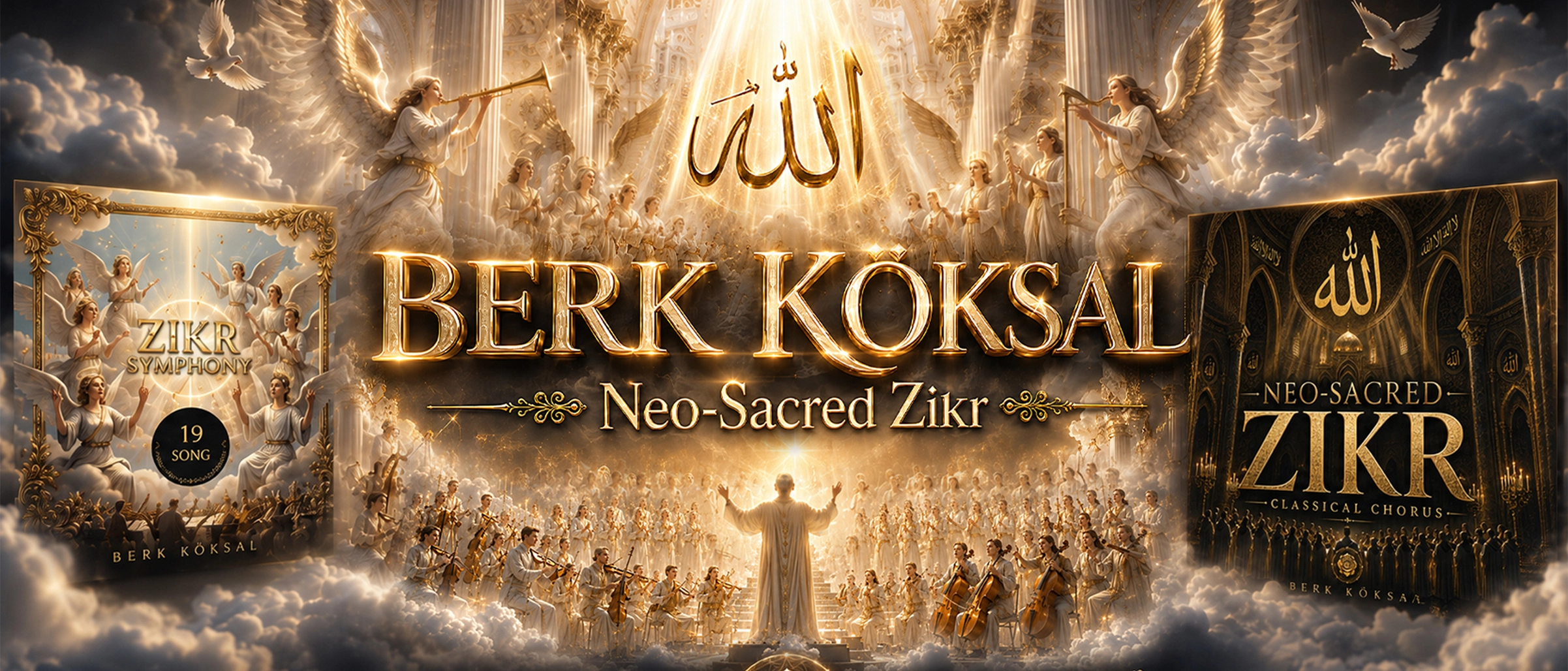
The name Neo-Sacred Zikr was formalized later, around the period of Classical Chorus and the development of Köksal's website. By then, he had created sacred works in radically different musical styles and wanted one broader concept that could bring them together.
Neo-Sacred Zikr therefore does not prescribe one tempo, instrument, harmony or production style. Rock, metal, classical chorus, ambient meditation, rap, jazz, children's choir and symphonic metal can all exist inside the same universe. Genres are tools; the shared purpose is zikr — remembering and glorifying the ONE GOD.
Words themselves are part of that philosophy. Hayy may sound like English hi or Turkish hay hay, while Al-Hayy is the divine name “The Living.” HÛ may sound like English who? or like a simple call; in zikr, however, HÛ is used as “He,” referring to GOD. For Köksal, especially in Zikr Huu and ZIKR SYMPHONIC METAL, understanding the word changes the way the sound is heard. Words matter; words used for the names and remembrance of GOD matter most.
The musical style may change. The purpose remains the same: remember and glorify GOD.
VIII · Albums
2024
A three-part album built around Tövbe Ettim, Estağfurullah Ya Gaffar, presented through vocal, instrumental and piano/choir-centered forms.
2025
The first large-scale Neo-Sacred Zikr concept album: 19 main works, with the nineteenth containing an additional 19-part medley.
2026
A nine-piece minimalist meditation built around female voices, repetition, stillness and remembrance.
2026
A 19-track atmospheric work shaped by female vocals, rain ambience, piano, ney and gentle rhythm.
2026
A 19-track return to Köksal's rock and neoclassical guitar roots, with intensity and distortion rising across the album.
2026
A 19-track choral and classical project that helped establish Neo-Sacred Zikr as the name for the wider musical universe.
2026
A 19-track children's choir project created from the idea that children who believe in the ONE GOD should also have music through which they can remember and glorify GOD.
2026
A 19-track project that uses the rhythm and energy of rap for zikr, remembrance and praise of GOD, opening with Bismillahirrahmanirrahim.
2026
A deeply personal 19-track work focused on inward remembrance, divine names and a final composition built from the Huruf al-Muqatta'at, the QUR'ANic initial letters.
2026
A 19-track sacred jazz project using extended and modal harmony with a warmer, calmer sound.
2026
A 19-movement concept album centered almost entirely on HÛ, with occasional Hay / Al-Hayy, uniting sacred choir, orchestra, organ and progressive neoclassical metal.
Family and Memory
Köksal has composed personal works for his daughters Bernaz Su Köksal and Arya Belinda Köksal. For him, music is not only a public art form; it can also preserve family memory, love and moments that would otherwise disappear with time.
QUR'AN Research & Software
Alongside music, Köksal works in software engineering and QUR'AN research. His analytical approach to music, code and textual research reflects the same habit developed in his early MIDI years: examine the structure, verify the parts, understand the system and continue learning.
Final Statement
QURAN: THE FINAL TESTAMENT
Authorized English Version · Translated by Rashad Khalifa
Quran: The Final Testament ↗